Trucking CPA and IFTA Audit Defense in California
IFTA is the quarterly fuel-tax return every interstate carrier files with its home state. Run trucks out of California and the same mileage, fuel and settlement records drive that return, your EDD payroll exposure and your income taxes. We file the quarter and we defend the audit.
4 agencies
We appear before the IRS, FTB, EDD and CDTFA
4 years
How far back a California IFTA records demand reaches
CPA + EA
AJ Singh, CPA and Enrolled Agent - federally authorized to represent taxpayers before the IRS
1 in 2
Close to half our monthly bookkeeping clients run trucks
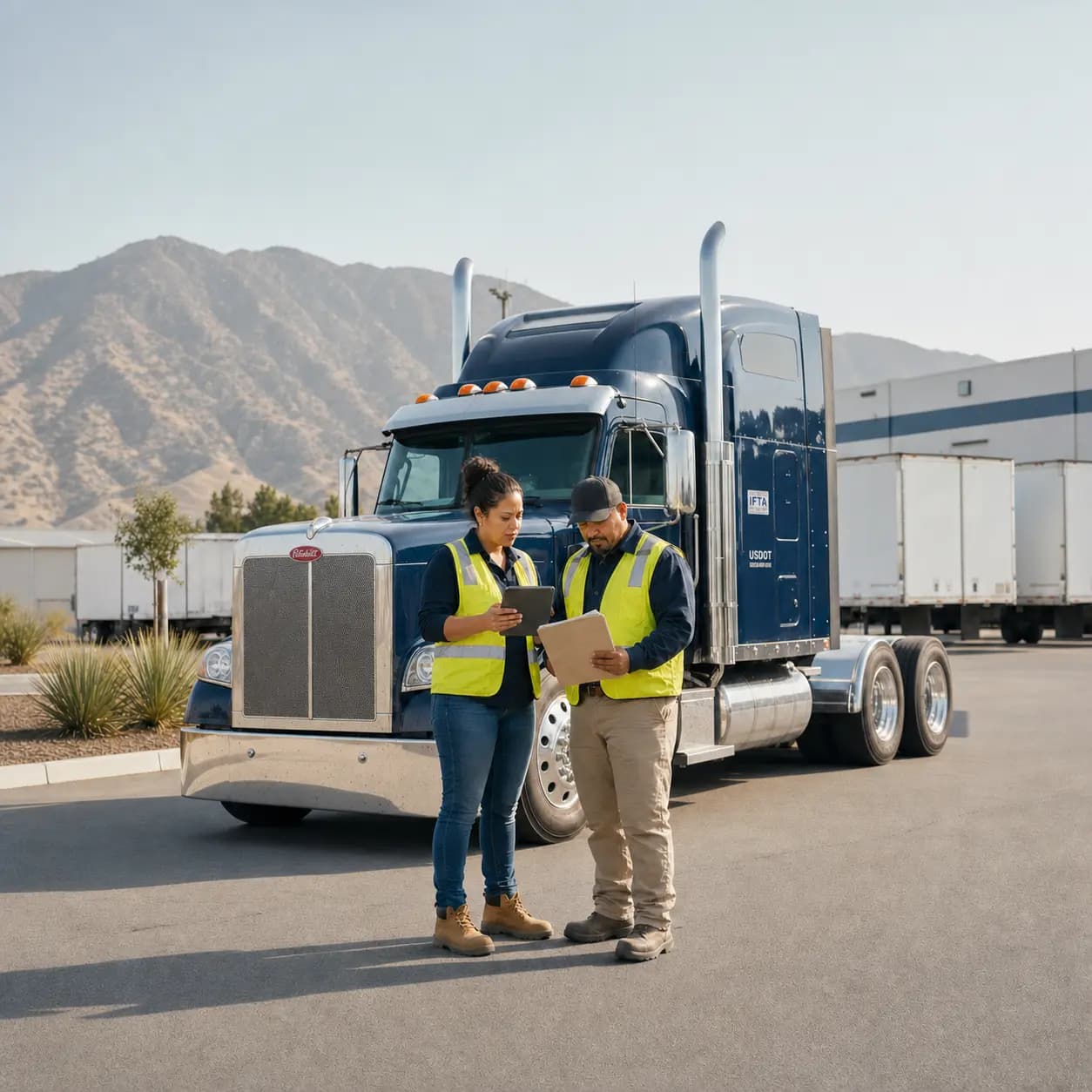
What actually triggers an IFTA audit?
In California, IFTA audits come from the CDTFA - the state agency that also runs sales tax. It picks accounts on a handful of signals: a reported miles-per-gallon outside the range a Class 8 tractor normally runs, fuel bought in low-tax states against miles run in high-tax states, large refund claims, late or amended returns, and account closures. Unexplained swings between quarters draw attention too.
Is this you?
What California carriers call us about
A CDTFA audit letter with a records deadline on it
The letter names a period and asks for your mileage and fuel records. We answer it, ask to see the auditor's math, and check how they got the number before the proposed bill becomes final.
Your ELD miles and your fuel card gallons produce an impossible MPG
The miles came from your electronic logging device (ELD), the gallons from your fuel card, and nobody tied the two together at the odometer. That gap is exactly what an IFTA auditor is looking for.
An IFTA license sitting open with no returns filed under it
Or the reverse - you are still on an Interstate User Diesel Fuel Tax license and the fleet started crossing into Arizona. Either way the unfiled quarters surface later, with penalties attached.
The IRS is asking why no 12 percent excise tax was paid on a rebuild
Glider kits and major rebuilds can trigger the 12 percent federal excise tax that normally hits a new truck's first retail sale. Whether yours does comes down to one calculation under IRC section 4052(f) - and the paperwork from the deal decides the audit.
EDD opened a payroll tax audit on drivers you paid on a 1099
California's payroll-tax agency wants your settlement statements, 1099s, lease agreements and dispatch records. We handle the trucking side; our EDD audit page covers worker classification in general.
Which license you actually need
IFTA license, Interstate User Diesel Fuel Tax license, or neither
A qualified vehicle is any truck over 26,000 pounds, or with three or more axles at any weight. Carriers get this wrong in both directions - running on a DI license after the fleet started crossing into Arizona, or holding an IFTA license nobody has filed a return under. Find your operation in the left column.
Scroll the table sideways to compare all three
Quarterly filing through audit defence
How we run an IFTA quarter, and what happens when CDTFA asks for the records
- 1
Send the quarter, or send the letter
Give us the CDTFA, IRS or EDD notice, or just your last four IFTA returns. AJ reviews it personally and tells you what it actually is and how long you have to respond. Same business day if it reaches us before 3pm Pacific.
- 2
We pull your mileage and fuel from the source systems, not from summaries
ELD (electronic logging device) distance exports, fuel card detail showing gallons by state, per-trip mileage logs (IVDRs), settlement statements and the IRP cab cards behind your multi-state plates. An auditor treats a spreadsheet of quarterly totals as a summary, so we do too. Within 3 business days you know which quarters are defensible and which need reconstruction.
- 3
We match your miles to your gallons, jurisdiction by jurisdiction
Miles by jurisdiction against gallons purchased, tied to the odometer at both ends of the quarter, including empty, deadhead and bobtail movement. This is the work that decides an IFTA audit. Typically 2 to 4 weeks, depending on how many quarters are open and how cleanly the ELD data exports.
- 4
We file the quarterly return, including zero-mile quarters
The IFTA return is due the last day of the month after quarter end - April 30, July 31, October 31 and January 31. A quarter with no movement still gets a return. Skipping it is one of the cheapest ways to buy yourself an audit.
- 5
We keep the records readable for the full 4 years
Distance and fuel records have to survive a 4-year reach-back, and an ELD export you cannot open in four years is not a record. We keep the source data, the reconciliation and the filed return together, one quarter per folder, in a format that is still readable later.
- 6
When a records demand arrives, we answer it, not you
Where records are inadequate, California's IFTA guide provides that the auditor may estimate gallons from your driving history, may apply a standard of 4.0 miles per gallon or reduce your reported MPG by 20 percent, and may disallow claimed tax-paid fuel. Where you failed to file at all, the assessment may instead be built from your filing history, or from industry average miles per gallon and industry average miles per qualified motor vehicle, with no credit for tax-paid fuel.
- 7
We represent you through the audit and the protest
AJ Singh, CPA and Enrolled Agent - federally authorized to represent taxpayers before the IRS - also appears before CDTFA, EDD and the FTB. We take the auditor's questions, ask for the worksheets behind the numbers, and carry the protest or appeal if the bill is wrong.
- 8
We fix the process so the next audit is boring
One mileage dataset feeding both IFTA and your IRP plate renewals so the two can never disagree. Reefer fuel pumped and receipted separately from the power unit. Factoring booked at the full invoice amount, fee shown separately. A quarterly close on a calendar instead of a scramble.


Beyond the quarterly return
The federal rules that decide what a truck actually costs you
IFTA is the filing carriers think about. These four rules are the ones that move real money - and the ones that most often come back as an audit two years later.
Form 2290 and the heavy vehicle use tax (HVUT)
Form 2290 is the annual federal highway-use tax return for trucks with a taxable gross weight of 55,000 pounds or more. The tax year runs July 1 to June 30; a truck first used in July is due August 31. E-filing is mandatory at 25 or more taxed vehicles. Keep the stamped Schedule 1 - it is your proof of payment.
The 12 percent federal excise tax on tractors and trailers
The federal excise tax (FET) adds 12 percent to the first retail sale of a new tractor or trailer, reported on Form 720 under IRC section 4051. A rebuild or glider kit stays untaxed only while the work costs 75 percent or less of a comparable new unit's price - the IRC section 4052(f) safe harbor. Run that math at the deal, not under audit.
Driver per diem and the DOT 80 percent meal deduction
Drivers under DOT hours-of-service rules deduct 80 percent of on-the-road meal costs under IRC section 274(n)(3), not the usual 50 percent. The special trucking per diem rate is $80 a day in the lower 48 ($86 outside), reset each October 1; departure and return days count at 75 percent of the rate. None of it holds up without a trip log.
Freight factoring, gross revenue, and a cost per mile you can trust
Book the full invoice as revenue and the factoring fee as its own expense - never just what hit the bank. Then split cost per mile: fixed (truck payment, insurance, plates) versus variable (fuel, tires, maintenance, driver pay). That gives you the break-even rate per mile to check every load against.
Who does the work
The people who file the quarter are the people who defend it
AJ Singh
Managing Partner, G&S Accountancy Inc
CPA and Enrolled Agent
AJ Singh, CPA and Enrolled Agent - federally authorized to represent taxpayers before the IRS. He reads every trucking notice that comes into the office and appears before CDTFA, EDD, the FTB and the IRS. His audit-defense work covers fuel tax audits with multi-year records demands, federal excise tax exams for carriers and equipment sellers, and payroll tax audits over owner-operator pay. On federal excise tax examinations of imported trailers he documents prior US retail sale unit by unit — registration and title records, VIN decoding, import paperwork — and agrees a sampling protocol with the examiner in writing before the work is done.
Our trucking bookkeeping team
Monthly close, quarterly IFTA preparation, payroll and 1099s
Close to half our monthly bookkeeping clients run trucks, so settlements, fuel, factoring and owner-operator pay are ordinary work here. The team that closes your month prepares your quarterly IFTA return - the person who reconciled your miles to your gallons is the one who can explain them to an auditor. And because trucks cross state lines, we prepare business and personal returns for all 50 states. California is home base.

Related industries
Who else we work with in and around trucking
Motor carriers and owner-operators
Drayage running port turns, warehouse-adjacent fleets, reefer, flatbed and single-truck owner-operators along the I-10, I-15 and SR-60 through Fontana, Ontario, Rancho Cucamonga, Chino, San Bernardino and Riverside.
Truck, trailer and equipment dealers
If you sell the chassis rather than drive it, the 12 percent federal excise tax is your exposure, not your customer's. Exemption certificates, proving which sale counts as the taxable first retail sale, and Form 720 are a different problem from the one a carrier has.
Construction contractors who run their own trucks
Labor Code section 2781(h) carved out construction trucking, but that carve-out applied only to work performed before January 1, 2025. See our construction and contractors page for job costing, retention and contractor payroll.
Gas stations and fuel retail
Fuel excise, CDTFA reporting and inventory controls on the other side of the pump. See our gas stations and fuel retail page.
Employers facing an EDD payroll tax audit
Worker classification, DE 231, the ABC test and the assessment math, for employers inside and outside trucking. See our California EDD payroll tax audit page.
Questions carriers actually ask
IFTA, Form 2290 and federal excise tax questions
A handful of signals. CDTFA looks at a reported miles-per-gallon outside the range a Class 8 tractor normally runs, fuel bought in low-tax jurisdictions against miles run in high-tax jurisdictions, large refund claims, late or amended returns, and account closures. Unexplained swings between quarters draw attention too.
Records
The IFTA records a California carrier has to be able to produce

Distance records
The Individual Vehicle Distance Record (IVDR), still widely called an IVMR, is the source document. Everything else is a summary.
- Date of each trip, with start and end points
- Route of travel, including intermediate stops
- Beginning and ending odometer or ELD readings for each trip
- Total distance, broken out by jurisdiction
- Unit number, and the fleet the unit belongs to
- All movement: interstate and intrastate, loaded and empty
- Deadhead and bobtail miles, not just revenue miles
- Registrant or licensee name on every record
- ELD distance exports kept in a format you can still open in 4 years

Fuel and license records
What a CDTFA auditor asks for once the distance records are on the table.
- Original receipts or invoices for every fuel purchase
- Gallons by jurisdiction - dollars alone will not do
- Date, seller name and seller location on each receipt
- Unit number the fuel went into
- Bulk fuel storage records, including withdrawals by unit
- Reefer fuel pumped and receipted separately from the power unit
- Your IFTA license, decal numbers and the last 4 quarterly returns
- IRP cab cards and the state-by-state percentages behind your apportioned plates
- Form 2290 stamped Schedule 1 for each power unit
Talk to someone who has read these letters before
Holding a CDTFA, IRS or EDD letter with a date on it?
Send it over before the response window closes. AJ Singh, CPA and Enrolled Agent - federally authorized to represent taxpayers before the IRS - reviews it and tells you what it is, what it is asking for, and what the deadline actually is. You will hear back the same business day if it reaches us before 3pm Pacific. Call 909-217-7855, or use the form. G&S Accountancy Inc, Rancho Cucamonga, California, serving the Inland Empire.
Request a 20-minute consultation
Name, email, phone, and one sentence about the letter or the quarter. Nothing else.
Related reading
More on trucking, IFTA and fuel tax
Guidance we have published for California carriers and logistics operators.
- Understanding Federal Excise Tax (FET) on Imported Tractors and Trailers: A Guide for Trucking CompaniesIn the competitive world of freight transportation, securing the best deals on tractors and trailers often involves…Read the article
- Challenges and Updates in Logistics and Transportation IndustryAfter emerging from the global pandemic, the logistics industry is facing new challenges. The year 2022 couldn’t…Read the article
- Per Diem in the Trucking IndustryThe question of per diem often occurs in the trucking industry. These are companies that transport freight (short haul…Read the article
- Empowering Logistics Companies With the Expertise of Form 2290https://www.youtube.com/watch?v=7ahctVc0-3c In the fast-paced world of logistics, managing fleet taxes and compliance…Read the article
- Fuel-Tax Audits Don’t Have to Derail Your Fleet: How G&S Accountancy Simplifies IFTAStruggling with IFTA compliance or fearing an audit? G&S Accountancy turns your paperwork chaos into clean, compliant…Read the article
- Commercial Clean Vehicle CreditMaximizing Tax Savings with the Commercial Clean Vehicle Credit The rise of electric vehicles (EVs) presents a…Read the article